Thursday, May 18, 2006

Rio Apurimac

The Apurimac River is only a few hours outside of Cusco, and is one of the most sought after multi days in the country. But, to catch this worm you have to get up early. We caught a cab out of cusco at 5 am in route to a small town about 40 minutes down the road. A reliable source had told us that there was a truck that you catch at 6 am which would take you too the Apurimac. We arrived at about a quarter to six at a small roadside restraunt, which also happend to be the transportation terminal. The restraunt owner informed us that a bus arrived a bit after seven which would be able to take us too the river. So, we took the opportunity to fuel up on a classic breakfast of rice and chicken. Which was surprisingly good. At seven, everyone was out and about whizzing up and down the street on bicycles and mosquitos (which is a motorcycle taxi, for those not familiar). The Bus arrived soon after and was packed. I mean way over 200% capicity, and the roof rack was overflowing. We pleaded our case to the driver, but no empathy was recieved. He did inform us that another bus would be arriving soon that could also take us. The driver was correct, and within a few minutes another bus arrived. The second bus possiably had more people than the first. But fortunatly the driver was less concerned about personal space and other irrelevent issues such as structural carrying capacities. So, he encouraged us too strap our boats on top of the already loaded roof rack. We loaded our gear and joined the rest of the passengers of our bus. There were no seats, and too be fair, there were more people in the isles than seated. The next three and half hours we spent rallying toward the put-in on some of Peru´s finest secondary roads.

As soon as we steped off the bus we were greeted by a swarm of natives. The natives didnt hesitate to attack, and immediatly our priority shifted toward swating these agressive motherf#€&$?s. The Apurimac is notorious for its ferocious sand flies which became apparant very quickly. All the locals knew these suckers had some teeth. a few young children were kicking a football around, and everyone of them was wearing a head net. I inquired with the gentleman who ran a small store by the bridge about head nets and he kindly offered a head net for the price of two soles( the equivelent of about 60 cents). Excited to be off the bus, we made our way to the river.

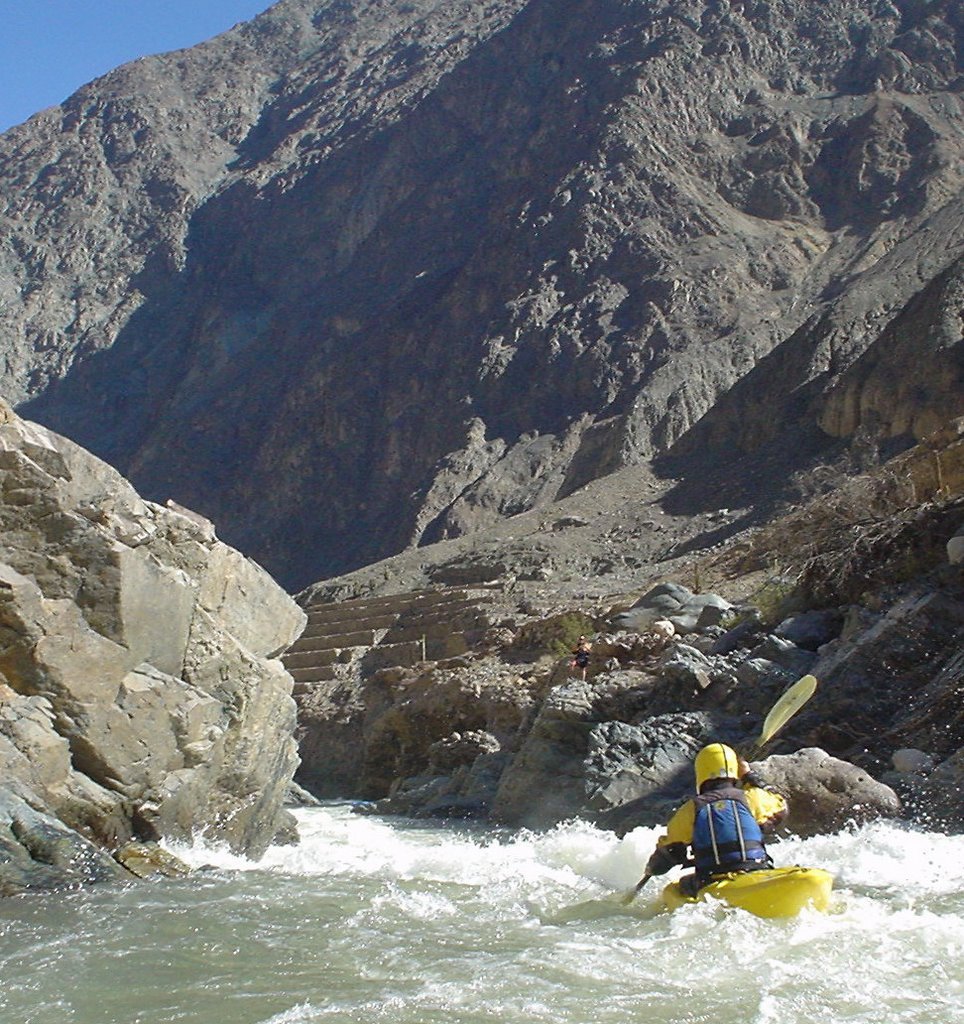
Within thirty minutes of being on the river we entered the first canyon. The river slightly narrowed and the canyon walls began to climb toward the sky. It was the first of the season and the river was high, so entering the canyon we were excited to see what lay between these dramatic rock walls. The river seemed to be mainly long rapids seperated by equally long pools. Floating into big water rapids is an aquired taste, that even when you enjoy it, should be consumed with a bit of trepidation. Combined with the late day sun every rapid looked similar from above. a horizon line of white explosions which was distorted from the glare. As you got closer to the lip the bottom often became apparant, and many times the line was obvious and the rapid very managable. But, every now and again you would float into something that the bottom wasn´t apparant. Which would entail locating an eddy within the rapid, or scrambling toward the bank to take a gander. At the top, as the sun is glarring you in the face, everything looks bigger than it is. And occasionally it is a bit bigger than it looks, but that is another story. That afternoon, we spent about three and a half hours making our way through the first Apurimac George.

we made camp above the second gorge. Fired up at how good the river was, we exited onto a nice beach as the sun departed the canyon for the day. ¨Most of the big rapids come the second day¨, was the extent of the information we had about the river. So tommorow was certain to be good. But, presently the task at hand was making dinner. And taking no prisoners in beach bochi ball. no prisoners were taken. And subsequently, we locked into a good bochi ball rally as dusk entered the camp..... after dinner we sat around enjoying the unique experience of being deep in a remote Peruvian canyon, when we saw the largest shooting star ever! it was one of those moments where three seconds in someone slowly say, ¨are you catchin this?¨ with the equally slow response of,¨oh....yeah.¨

Waking up on the river is an exceptional location to start the day. The light slowly emerges, while constantly changing until the sun shows its face for the day. After a leisurly breakfast, we broke camp and launched into the second gorge. The second gorge is not as dramatic in regards to vertical walls as the first canyon. But the rapids are stout. To our advantage the lighting was better, so it was much easier to scout from eddies. We had no problem making our way down, until in the middle of a big rapid i caught on eddy on the right without paying enough attention to what lie downstream. I signaled for Rob to catch an eddy on river left. He scouted his line and signaled that the left side was a go. When he got to the bottom, he signaled that the right channel had a big hole. At this point i was too commited downstream to make it left. The eddy i was in was deep and has surrounded by ten foot walls. Downstream there appeared to be a series of ledges. I could see the first two. But the bottom ledge was questionable and there seemed to be a suspect feature on the right that appeared to be sieve. After a bit speculation i was able to attain a higher eddie that had a really small ledge which i could get out on. With a bit of luck i was able to scale up the rock and pull my boat up. After scouting the rapid, the hole at the bottom appeared to flush through on the center left side. The top was pushier than i had anticipated but i was able to stay on line through the bottom. The second day proved to be incrediable. lots of big clean rapids. one big portage and one small one. The crux of the canyon was visually impressive, and i am slightly confused how they get rafts through a few sections. After lunch the valley opend up and eventually we arrived at the main road traveling from Lima to Cuzco.

The problem was we weren´t sure which direction Cuzco was. After an hour three cars had passed. two of them were busses, which indicated the direction of our destination. and the other car was going the other way. Neither bus had a roof rack, and even if they did, they were going so fast i don´t think they would have been able to stop. We had a few hours before dark, but after an hour not one potintial ride had passed. We had a little bit of oatmeal left over from breakfast, so we began planning to settle in for the night. And almost as soon as we verbally acknowledged our willingness to camp out by the road. An Angel came from the sky. Actually it was just a Tico (small cab) headed to Cuzco. I was so excited not too have to camp out by the interstate! Too add to our luck, he charged us ten dollars for the two and half hour ride back to Cuzco, which was so fair i could have done a dance on the spot. Actually, I think i did.


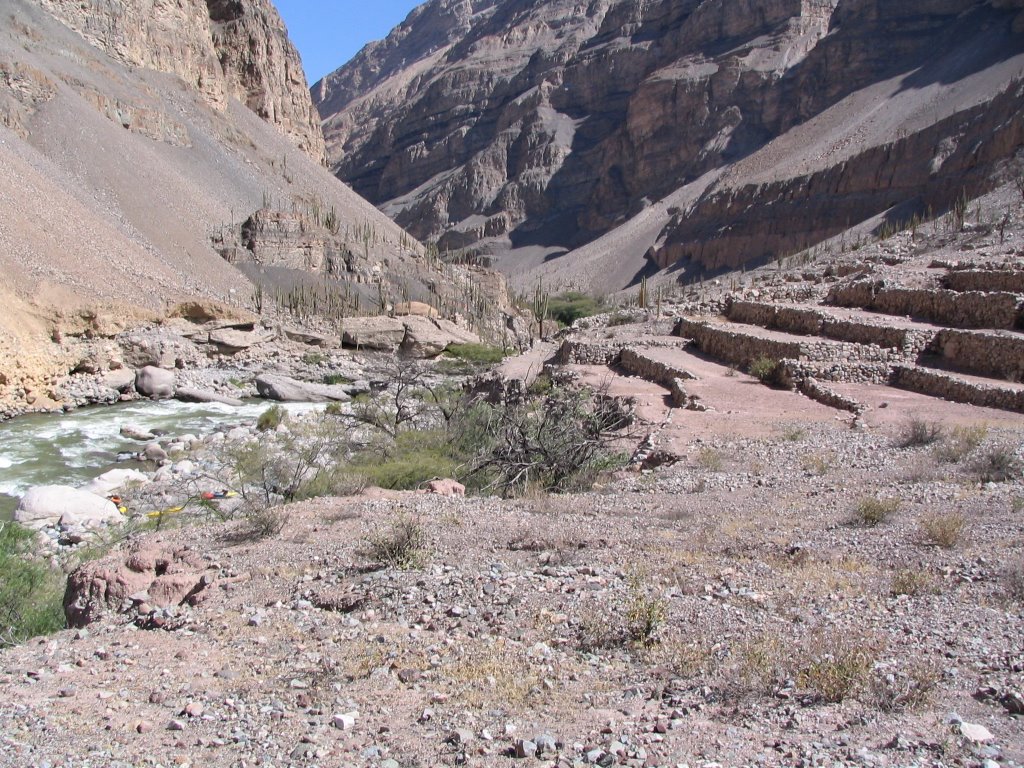
PICTURES: (above) taking a gander. (Below) ¨bread for sale.¨ the pinch, upper gorge. Rob, Floating into another exploding horizon line. o.k....you have my attention. Sequence. ten foot wall eddy. sometimes... a little luck never hurts. The cooliest cab driver in the world!




Tuesday, May 09, 2006

Cotahuasi River


Lying in the southwest corner of Peru is the deepest river in the world. The Cotahuasi river is over 10,000 feet deep in sections, and provides a dramatic contrast to the arid region that surrounds this oasis. Despite the remote nature of the Cotahuasi, This fertile region led rise to a large network of villages. Connected by an exceptional trail system that stands, even today, deep within the Cotahuasi Gorge. Passing through this gorge is a step back in time. Both in regards to the abandonded villages, and the striving regions that are still presently inhabited.....

Traveling to this phenomenal region of the world is a logistical challange to speak mildly. in order to avoid making the mistake of taking the local bus, Gian Marco´s sister was persueded to give us a ride. We traveled four hours up the road where we had arranged to meet another driver that would take us too the town of Cotahuasi. The whole drive took about twelve hours, so we arrived at the river at around two in the morning. Exhausted from the ride, we piled out of the van and made camp. Our mules were not supposed to arrive until the following day. So, we spent two evenings at our camp outside Cotahuasi. The next morning, Gian Marco and i were able to catch a ride up the road and paddled an upper section of the Cothausi. It took us a few hours to get back to camp. the section was pushy and continous, which was an exciting introduction to what lie ahead of us.

The Cotahuasi Gorge, below Flatwater Canyon, is ideally a five day trip on the water. But with amount of fascinating archeological sites and side canyons; I feel as though I could spend weeks inside the canyon exploring. But the river level was high and we were the first team of the year. So, the plan was too move efficiently down stream. In order to have time to difuse any situaions that might have arisen during the extremly high water season.

The mules arrived the next morning and we were half packed. so, we finihed up and met our team of porters. We had ten mules which would carry all of our gear for 16 kilometers to the put-in. On a side note; in the past there had been a problem with mules not wanting to walk with gear into the canyon. They seemed to never want to walk away from home. Recently, it was discovered that the township at the put-in had a satalite internet connection. So they started hiring mules from the village near the put-in. Now, as soon as the mules are loaded. They almost, without cohersion, begin making their way back toward home. We spent all day making our way toward the home of our porters, and also to our launch point.

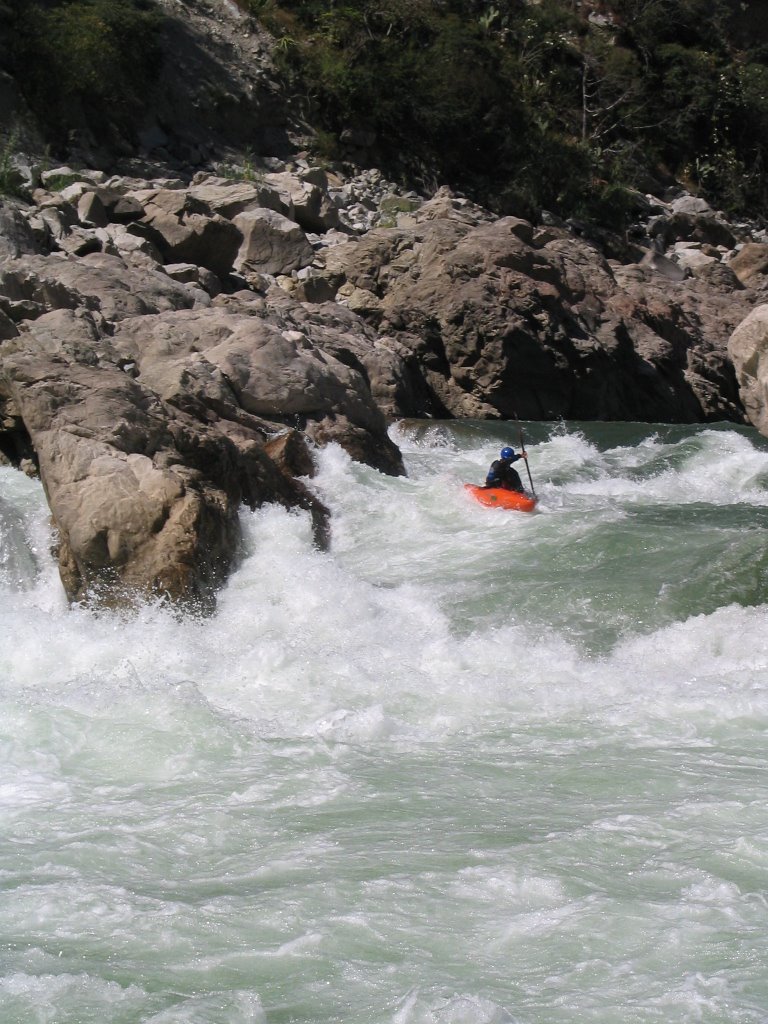
The next morning we were fired up to get on the water. After building the oar frame, and riging the boat we talked a bit of safety. Everyone got on the same page with hand signals and we even practiced a bit of swiming for our rafters. Once on the river, the Cothausi did not hesitate to dictate her character. Almost immediatly upon launching we entered a long series of rapids. the high water combined with the incrediable countinuous nature of the Cothausi made it challanging to work with the oar rig. The Plan, was ideally to have the four kayakers spread within eyesight and communicate what the line was too the raft. Though if anyone caught an eddy it would only take a few seconds before the raft would come barreling through. If the raft got ahead, then we would be chasing a moving undercut downstream which is not a good idea, and essentially only adds to the drama. So, we would often have to just get into a rapid, that the exit was not apparant. We would boat scout as far as possiable. But if the exit appeared to be suspect, we would quickly exit the river and sling the raft into an eddy. Aiding the raft into eddies became a neccesary skill. Sergio, our oar´s man, did an excellent job of controlling his descent but it was a team effort getting the oar rig to pause. When we were not able to run the raft through a section we would place the boat on a line and control the descent from the shore. By the end of the first day, we were all excited how good the river was but were exhausted from high water challenge of navigating on the fly with four kayaks and an oar rig.

Day two maintained the integritiy of the Cotahuasi. We had camped next too a big rapid called ¨the wall.¨ So, subsequently the firt strokes of the day placed you right in the midst of it. After several hours of continous rapids, we entered a slightly steeper section that proved to evoke several problems simoutanously. We could boat scout, but the rapids were big. And the time it took to catch an eddy and figure out where too go eventually become more time than the raft had room. At the same time the raft lost a paddle and managed to disengauge one of the oars, rendering it useless. As the raft came barrelling out of one rapid into the next Rob and Gian Marco raced ahead in order to sling the raft into an eddy downstream. Keta, had gotten behind the raft so i waited in an eddy for here to gain a line of sight. She had gotten out to scout and was unale to see the entire rapid. She dropped into a large hole forcing her to swim. i couldn´t even see her enter the rapid, all i saw was multiple items floating out of the bottom. She swam hard and was able to catch the eddy i was in before floating into the next large rapid. She acknowledged that see was o.k. so i peeled out in pursuit of the gear that had already entered the next rapid. Luckily, within a few minutes we were able to recover all of her gear and fix the oars.

From that point, we loaded a kayak on the raft and created a crew of three for the oar rig. That evening we camped early. Day two had been a challenge. The Cotahuasi is amazing. The river is so continous. It feels like we are paddling for ten minutes at a time before there is an eddy big enough for everyone to congregate in. The Character of the river is excellent, providing very clean managable rapids. That due to the water level also have plenty of padding...... directly adjacent to the busseater holes. We made a nice camp. Cracked a bit of scotch, while making dinner. And were all in bed soon after the sun had set.

Day three is a big day, which involves Marpa rapid, along with Meter and Centimeter canyon. It was neccesary to get through both canyons, before there would be another appropriate camping location. The highwater in this area would prove to be challenging. Marpa is a long rapid that consisit of several sections and eventually funnels into a massive hole. Centimeter and Meter Canyons also contain simular big long entrance rapids that pinch down at the end, thus giving validation to their names. Passing through these sections was a challange and required a strong team effort. we lined two rapids, one loaded and one light. A missed sling forced Gian Marco to Row Marpa, which was performed with unrivaled grace. The canyons were phenominal! The river boxed up provoding a series of excellent rapids amongst guarded walls. Also, due to the constricted nature of the river in these particular section there were extensive archeological sites where the river did not flood and it was possiable to cross the river via bridge.

Day four was long. we started early and ran a great section of water for about four hours until we approached the confluence with the Moran. This section, above the confluence, was probley my favorite section of the Cotahuasi. At this point the river level more than doubled and entered a slightly broader valley. We had lunch at the confluence. Following lunch, we cranked into a heavy headwind for about four hours before making camp outside the first small village we had seen in alomost a week. Gian Marco and Sergio walked into the village in order to inquire about a ride. There was a bus that left at seven in the morning. We negotiated a few burros to help us get into town. Morning came early. The mules made their way into camp as the sun began to attempt to penetrate the heavy fog that had drifted up the valley. Two mules,three busses, and a landcruiser later we were back in Arequiipa.

PICTURES:(above) Sipia falls. (Below) Plenty of juice. upper Cotahuasi.Gian Marco giving it a going over. our porters heading home. Gian Marco and Sergio making a plan. (two photo sequence) day 2.sergio keeping it clean. (four photo sequence) Day 3. Another no name rapid, Cotahuasi River. Rob in meter canyon. Another archeological site, which i can´t figure out how anyone gets two. Cafe Cotahuasi. Checking for shrimp. early morning departure. the first town in six days


Wednesday, April 26, 2006

U. Upper Colca


Upon returning from Bolivia we were eager to get back on the river. After hearing several different reports on the river levels, we finally got a sound confirmation that the Colca River was low enough. So, we packed and were ready to catch a bus too Chivay. Where we would attempt to persuade a cab driver to give us a ride over the pass to the the dam. Luckily, we were saved from having to attmept that logistical fiasco by two friendly Canadians. The day before we were planning to begin traveling toward the Colca, two friends of a friend showed up in Arequipa. they were driving a friend of Gian´s Jeep from Chile to Mexico and offered to give us a lift to the dam. The next morning we began making our way toward the Colca. Though, we left with the best exptations of putting on the water that afternoon. We pushed the trip back a day in order to get two full days on the water. so, that evening we stayed in Chivay where we took the opportunity to wash the layer of dust off that had accumulated over the days drive. the Jeep we rode in did not have windowns, so the interior was constantly churning with dust.

The next morning we left Chivay around seven and began the two and half hour drive over the pass. When we arrived at the launch point we were all surprised to see a massive series of slides pouring into the Upper Colca. From a distance they looked big, which is always a good indicator that what you have is one large rapid. the series of slides was close to three hundred yards long, and after further inspection they all seemed to be managable. the entrance had a few massive rocks, but it appeared that they could be avoided. In the middle of the first slide everything pinched down, creating an elevated flume on river left, and a hole on river right. After, the pinch everything opened back up. and the crux was being sure you got left after the pinch. Going right on the bottom section of the first slide was not an option. It appeared that the amount of speed you would carry would allow you get left, but there was really only one way to find out.....

So, my first strokes of the day were peeling out into the headwaters of the Colca. everything was calm, and i could visualize myself being left. Once, i was in everthing went smooth. I cleared the entrance, and was able to skirt the hole and make it too the left side of the slide. Robbin and Rob followed with equal success, and our day was subsequently off to a great start. so we loaded our boats and set out to log some miles on the upper upper colca.

It was almost lunch when we finnally launched, but we were so excited about the slides that we weren´t really concerned about our late start. The upper upper Colca is mostly a mellow section of river that meanders through a spectacular series of canyons on its way back to Chivay. We paddled hard for about four hours and found a nice beach to make camp. Based on the information we had, we assumed that we were only a few hours from the first village we saw before we seperated from the river and began moving over the pass. So, we made camp and enjoyed a very tranquil evening in the upper colca region. Our launch point sat at over 4,100 meters, and we hadn´t dropped that much gradient. So, when the sun departed for the day it got cold. And subsequently, we didn´t sleep that well. When the sun finnally reemerged in the morning,it was a welcomed sign of the new day.

After warming back up and preparing breakfast, we slid into the river expecting another mellow day. The boat i was paddling had been broken and welded....twice. So, by the second day the few rocks that i had managed not to miss had opened my weld back up. So, by mid day i was sinking every ten minutes. so the process was: go hard for eight minutes. try to push a sinking boat through the water for two minutes. and, right before i am about to sink, get out and drain out the water. My method seemed to be working pretty well, but as the day drew on and the sun departed again sitting in cold water became less appealing. After paddling hard for about 7 hours we finnally exited the canyon and arrived at a small village that we were initially planning to bypass and takeout at the next town, which was quite a bit larger. excited to have made it before having to spend another night in the high dessert. As the siutation presented it´s self we took off the river. Luckily, we were able to convice a local man to drive us the hour and a half back to Chivay. And once again.....it all works out.

Pictures: (Above) First strokes of the day, entrance to the Colca Super Slides. (Below) Sequence shot. Colca Super Slides. you know when you have found a hot springs. just look for the colorful rocks. Stuck in traffic. making camp. Rob, taking a peek. local color.


Monday, March 27, 2006

Bolivia


Last week we escaped Arequipa. And decided to see how the socialist movement was advancing in Bolivia. From Arequipa we traveled to Puno and then to Copocabana, which sits on the shore of lake Titikaka. After recuperating, from another day lost bouncing up and down on a bus, We took a boat to the isla del Sol. The isla del sol is an island that is about an hour and a half from Copocabana that sits in the midst of lake titikaka. We opted for the late boat and planned on staying at a recomended hotel on the north of the island. Most people leave early from Copocabana and opt for the day trip.Upon arriving, we learned that the early boat arrives on the north of the island, and the later boat arrives to the southern port. So as usual, we had to call an audiable, when we discovered that the late boat did not go to the northern port. We tryed to convince a few fisherman that it would be fun to sail up the coast. but they saw straight through our alterior motives and politely declined. So, we had a few hours of daylight and figured we could give it a shot, and try to traverse the entire island. once ontop of the ridgeline, a well tracked llama path diverted us and eventually led to a dead end in the middle of a steeply terraced agriculural area. We could see a trail in the distance, and opted to go terrace hopping as opposed to backtracking. Some of the terraces were taller than they were wide, and we were trying to be careful not to disturb any of the fava beans. a few old ladys gave us a serious eyeball, but upon meeting them their eyes mellowed, and were fine with us passing through.

The past few days, the sky had been a bit overcast. so the terrain around the lake appeard to be rolling hills. so, when the clouds cleared later in the afternoon. we were shocked to notice that the clouds had been veiling a range of snow covered mountains that stood up too 18,000 feet tall. the landscape quickly became very dramatic. We followed the ridgeline until we could see a small village in an inlet that we guessed was where hour destination hotel was. so again, we opted for the short cut. and eventually made it too the beach. A local pointed us in the right direction. and we eagerly strolled down the beach to the hotel. When we arrived at our hotel, i swear i saw a tumble weed. Apparantly, our highly reccomended beach front hotel was undergoing some changes in management. And appeared to have quickly fallen from grace. we walked around trying too see if there was anyone there. eventually, a man appeared, who we guessed was squating on the property. we asked about vacancy, and he said,¨sure. just give me a second to straigten up.¨ the view was beautiful, but i think we were the first visitors in a year or so. So as he scurried off, to remove dogs that had occupied some of the suites. we carried off down the beach, laughing at the situation. as we continued on, we passed several other hotels that seemed to have been closed or abandoned. And as night approached we contimplated camping at one of the hillside hotels, when a local couple informed us that a few kilometers up the trail was another village. So, we contiued along the cliff side trail toward the northern fishing village. on the trail we met a mandolin player who was playing that evening. we arrived just at dark and found a great little place right on the lake.

That evening, was the begining of lent so most of the village gathered to celebrate. Everyone gathered around the church, and played music for several hours. the party ajorned early which we thought was surprising due to the fact that it was friday. But when we were awoken to Bells several hours later we began to understand the schedule of a fishing village.

The next morning the sun came out and after breakfast we took a few hours to explore the norhern portion of the island. The day before we had been talking big about swiming in the lake, so as clouds began moving in our bravery began to wain. But we were patient and finally were given a nice window of sunshine. So, rob and i ate our words and went for a brief swim. The boat ride back was beautiful, and we arrived back in Copocabana at sunset. Tommorow we head toward La Paz.

Pictures....above..isla fishin vessel. below..the curtain is lifted.. let the party begin... the sun is out. how cold could it be.


Wednesday, March 15, 2006

Mas Champagna, Por Favor


So, sometimes traveling is easy; it is merely a matter of taking ones seat and waiting for the champagne to be served. Maybe, strike up a conversation with the attractive woman sitting adjacent to you. And drop a quick prayer that you haven't seen the feature film that is getting ready to be shown. At other times, traveling from point A to point B has the ability to test ones will and shake your personal sense of patience to it's core.

Rob, and I arrived in Arequipa yesterday after enduring a true test en route from Cusco. Traveling with Kayaks is at best catch 22. Sometimes it opens doors, and very often it is a limiting factor. Typically, it is just a lot of heavy shit to lug around to the next river. We had discovered that most of the long distance coaches did not have roof racks and if by some chance you could talk the luggage managers into taking you're gear it would more than likely double the cost of you're ticket. So, trying to avoid the excess baggage charge when buying tickets to Arequipa we located a local bus that had racks and was willing to be bribed to put our boats on top. We were supposed to leave in the morning and we arrive by late afternoon. Though it is only about a six hour drive from Cusco to Arequipa via car, the bus route is differnt and takes about ten hours. The clerk at the desk had told us that it was a direct route. A direct route is very important, otherwise you stop in every town picking up and dropping off people- not too mention the countless verndors and traveling salesmen.

So, the next morning we arrived at the terminal around six, loaded the boats and took our seats. The bus was not nice by any means, so i didn't even ask the driver if it was possiable to get a mimosa. On the positive side, the bus seemed to be undersold so it looked like we would be traveling light. We left the station and didn't drive a hundred yards before the driver stops to pick up people. Over the next hour, we stopped every possible chance on our way out of cusco and picked up enough people to fill the bus twice over. I am pretty good about people getting into "my space," but at this point i was on the verge of freaking out. I was sitting next to a large Qechuin women, and in the isle facing me was a very large man who seemed to have trouble maintaining his balance, every turn my face seemed to be the gaurd rail that prevented his belly from falling out of the fucking bus. It is a funny image but at the time I wasn't sure how long I could maintain my demenor. After a few hours they both got off and I regained a bit of sanity.

So, we had been driving for about six hours and we had stopped at every town possible. The bus stank to start with but a little bit of incubation will always create some new smells. And when we picked up two women selling baked beef spine, the bus went crazy. Baked beef spine for everyone! The smell was so revolting that i had to litterly hang my head out the window, while everyone around me layed into some spine.

As everyone was relaxing, letting their spine settle, i was staring out the window. We were crossing a desert plateau that sits at about 14,000 ft which was beautiful. All of the sudden our driver-side front tire released, sending the front left side of the bus into full grind causing the radiator to explode upon impact. Our driver did a great job keep the bus from tipping over. But by all estimates we were at least three hours from anything and missing a tire. It tuned out that we had lost our rim, though it probley wouldn't have mattered anyway because we didn't have a jack and the radiator looked toasted. A group of people immideatly deserted, when a box truck stopped. Having Kayaks with us, hitchhiking seemed tough. Especially, since alomost every vehicle was either a bus or a semi. And it seemed that only a handfull were passing every hour. There was a big rock outcropping in the distance, so we took the opportunity to stretch our legs and escape the stinch, if only for a while.

As the sun began to set, I returned to the bus to read while we had light. When a small girl grabed my attention, and pointed out that rob had flagged down a semi. Yhrough the front windshield i could see Rob running back to the bus. So, i tossed our stuff out the window and climbed ontop to begin unloading boats. Within a few minutes we had reloaded our gear ontop of 40 tons of rock destined for Arequipa, and we were on the road again. It was dark, and the load forced us to drive slow. But we were moving. And the cab smelled of Axle greas, which was a big immprovement from the bus. Our driver was very friendly, had great taste in music, and didn't seem to mind a bit of company. Though, he was a year younger than Rob and I he already had eight years experience driving big rigs. After four hours, we had driven about 110km. it was getting late and rob and i had passed out. When a familiar sound raised it's ugly head once again. BOOM!BOOM! " you have to be fucking kidding!" Apparantly, we were exceeding our recomended weight and the heat generated from the exessive pressure caused both back right tires to blow out. now changing a tire is one thing, But changing a four foot tall tire on a semi with 40 tons of rock is a completely differnt animal. The wind was howling and the temp was heading below freezing. So, we took turns on the jack to stay warm. and after an hour or so, we had one tire off. But the inner tire was a bit more trouble, and it seemed that the jack wouldn't give us the extra two inches we need. So, after two hours the mission was abandoned and we settled in for the night.

That evening it dropped just below freezing, and in the morning we were greeted with several huge volcanoes surrounding us and a heard of animals running just outside of our camp. They look similar to llamas, but are much slimmer and have the ability to run very fast. As rob, knocked the ice off of his bivy bag. The driver and I began working the same problem again. "how do you make a jack want to be taller than it is supposed to be?" and the answer is, if you have 80,000lbs of rock sitting on top. you don't do shit. After a few hours we began trying to hitch with little success. There weren't many cars and the ones that did pass were not equiped to carry what we had. Eventually, a potato truck stopped and a whole family piled out: like eight people in an exteneded cab. They were very friendly, and helped us throw our boats in the back of the truck. The truck was about 3/4 full and offered a great vantage point to veiw the beautiful surroundings heading into Arequipa. We were moving again, and point B seemed to be almost in sight. I felt that i could almost taste it. After a few hours we pulled into the local market in Arequipa; to everyones surprise, there weren't just potates back there, but also, some strung out gringos. carrying huge pieces of colorful platic. a cab to the hotel makes four rides, and we were there. A cold beer in the shower was just as i had imagined. More champagne, please!

Pictures: (Above) views from the potato truck. (Below) Tire one....Gone. Tire two....and three...gone. dawn in the desert. the last leg, via potato truck. first trip of the year. Rio Chili, Arequipa.


Wednesday, March 01, 2006

Negotiations cease, as fighting continues


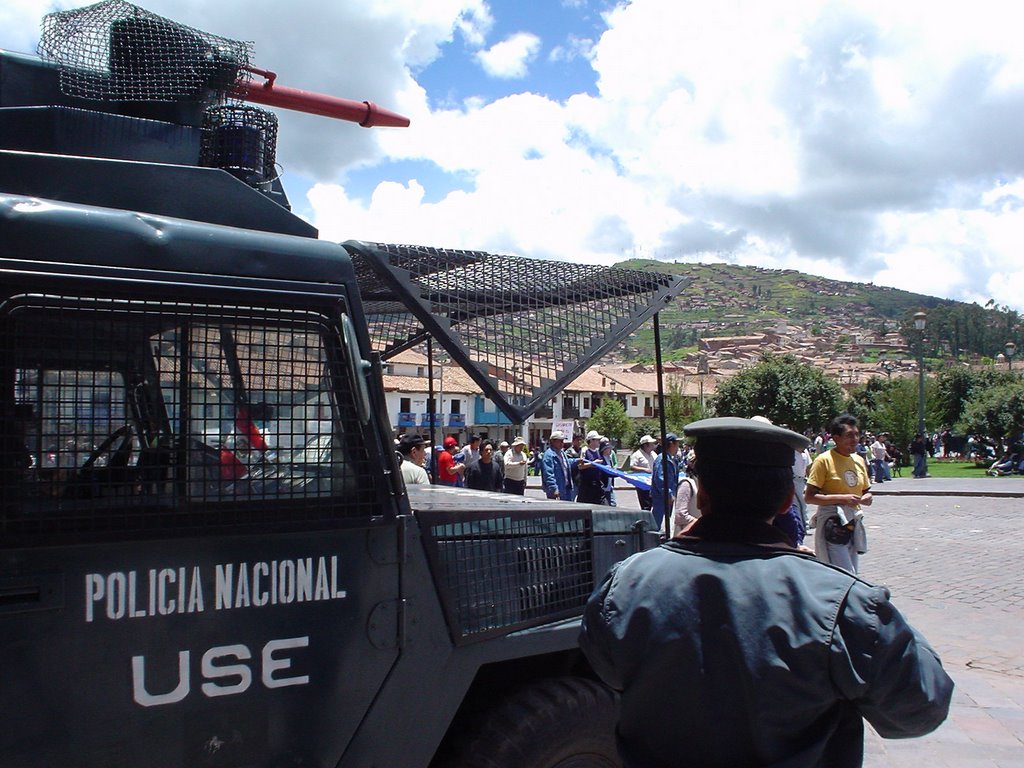
Negotiations ceased today, as fighting continues in the once Incan capital of Cusco. It is expected that fighting will continue throught the weekend, and there has been speculation that the level of terror will remain elevated potentially through next week. This weekend most shops are expected to be closed, due to the expected level of terror that is suspected to cover this city like a wet blanket. Stores are being overwhelmed by the demand of such items as shaving cream, and water balloons.....
Carnival has been in full swing which is a very exciting time to be in South America.
despite the heavy fighting, we have been able to exit the city and enjoy some of the rivers that surround Cusco. Though most of the classic canyons are still to high there are some sections that are managable at high water. So, the Vilacanova has been the staple. In a few days, we are heading to Arequipa

Monday, February 13, 2006

Open Season.......


The only way that i like to cap off a seventeen hour drive through the desert is with a good ole fashion water fight. Upon arriving in Lima this afternoon we had no problem finding a few eager soles. GianMarco´s Son greeted us with a waterballon at the front door. And by the time we reached his brother's house the gloves were off. Mind you, this was not a battle but war. And these kids were in their element. Their Tactics were sharp and their attitude relentless.

So Where to Begin. About a week ago we arrived in Mancora, Peru. Planning to Meet GianMarco and head south to Lima. The Beach was perfect, and we were easily stalled for a week. Mancora is one of the most popular surf spots in Peru, and draws quite a crowd. One of Gian´s friends, who owns a hotel/tour company had been wanting to explore a river north of Manacora that flows out of Ecuador. We had a rough idea where the put-in was and a bad map. So by our best guess, the road was about four hours and the river about 50km. After a usual late start, we arrived at a millitary check-point at about 1a.m. in Ecuador. We let our selves in and decided to camp. the local officer later found us and explained that he would have another local officer help us find the river in the morning.
That evening, we assumed we were about a half an hour to the put in. So the next morning, after a few hours negotiating our way down the trail, we began to get suspicious. The local officer that met us was an interesting character to be mild, and by the end of the day was more of a burdern than a blessing. After picking him up, instead of taking us directly to the river, we seemed to run a series of errands for him. But not before we stopped by his house to pick up his pet monkey, which his insisted on bringing with us. After stopping at several of his relatives houses we began to get a bit frustrated and were eager to find the river. The driving the second day, was much more demanding than the previous and was certainly our Land Cruiser. GianMarco´s driving was impressive, though he almost lost his cruiser in a river crossing on the way back. He teetered on the edge of stalling for TEN MINUTES before the car bacfired and cleared the exhaust. We eventually made it to the river after spending 4.5 hours rallying through this unique arid jungle. The river that we were trying to find was supposed to be pretty mellow, but it had only been run once and that was fifteen years ago. so really, we knew very little. Looking at the map there appeared to be one major gorge and a long paddle out. Due to our late start, we planned to spend the night out and packed accordingly. Once on the river, the walls boxed in very quickly which created a very dramatic long gorge. The rapids were mellow, but walled in rapids that go around corners are always a bit intimidating. It didn't help that at the first rapid a ten foot long crocodile scurried off a small beach into the water. We had no idea that crocodiles were in the area, and after that point we became very suspicious of big eddies with nice beachs. We ate lunch on a tall rock outcropping, assuming that a defendable elevated position was much more ideal than a beach surrounded by tall grass. The river was beautiful, and one of the most unique enviroments i have ever been in. It appeared very arid but was covered with trees that looked more similar to a cactus. The river was also filled with herrons, parrots, giant iguanas, and of coarse crocodiles. It turned out that the map we had was totally off, and were able to paddle to the nearest town in just over four hours, as opposed to the marathon we were expecting. We even beat our shuttle vehicle, and after hearing there stories of getting out of the frontier. I think they might have had the bigger adventure......

PICTURES(Top-Bottom): Water War, Rob making a late advance.Desert sunrise, Peru. Rob, Scouting for Crocs. Our trusty guide, curtousy of the Ecuadorian Millitary. GianMarco, Getting into it.


Subscribe in a reader